
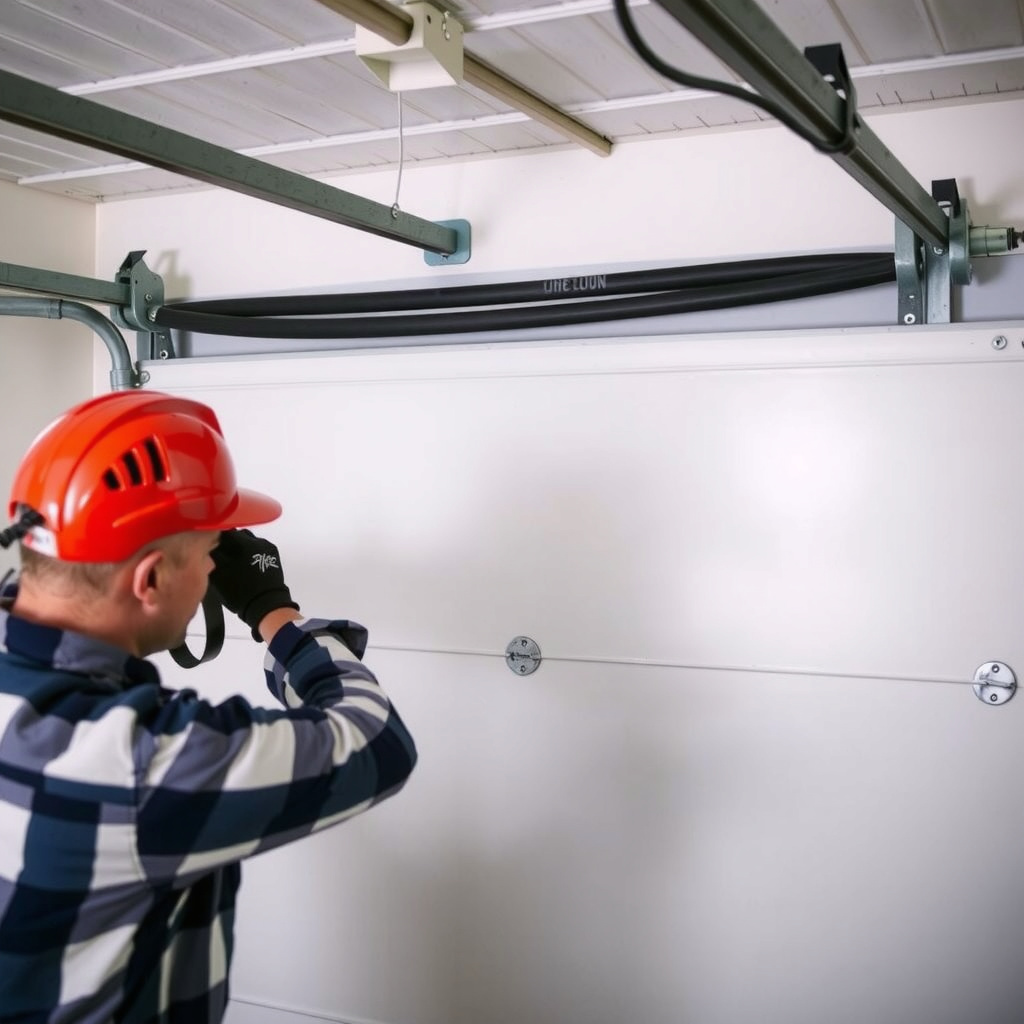
Garage Door Cable Repair vs. Replacement: What Kensington Homeowners Should Know
Garage door cables do quiet, critical work — and when one frays or snaps, the door can hang crooked, jam, or drop unexpectedly. Homeowners often ask whether a cable can be “repaired” or has to be replaced. The honest answer is that cables are almost always replaced rather than patched, and this guide explains why, how they fail, the different cables on your door, and why it’s firmly a job for a professional.
What the cables do
The lift cables run from the bottom corners of the door up to the spring system, working with the springs to raise and lower the door smoothly and keep it balanced. They’re under significant tension whenever the door is closed. Because they carry the door’s weight in concert with the spring, a cable problem is never purely cosmetic — it affects how safely the whole door operates. There are also, on extension-spring systems, safety cables that run through the springs to contain them if they break, and retaining cables in some setups. Knowing your door has more than one kind of cable is part of why this isn’t a simple swap.
Repair vs. replacement — the real answer
Unlike a squeaky roller you might lubricate, a cable that’s frayed, kinked, or snapped isn’t something you patch. A compromised cable has lost integrity, and splicing or reusing it risks sudden failure under load. So in practice, the fix is replacement, not repair — and usually the lift cables are replaced in pairs so both sides wear and stretch evenly. What a good technician “repairs” is the system: replacing the failed cable, checking the drums and spring for what caused it, confirming the cable is seated correctly, and rebalancing the door.
How cables fail
- Rust and moisture. Cables fray from the inside out when exposed to moisture over years — common on older Kensington garages that aren’t climate-controlled.
- Age and wear. Like springs, cables have a service life; decades of cycles wear and stretch the strands until they weaken.
- Drum or track problems. If a cable jumps the drum or the door goes off-track, the cable can kink or unwind.
- A broken spring. When a spring fails, the sudden shift in load frequently damages a cable at the same time — which is why spring and cable emergencies often arrive together.
- Misalignment or a bind. A door that’s been running out of alignment puts uneven strain on one cable, wearing it faster than its partner.
Signs you have a cable problem
- The door hangs crooked or one side lags the other on the way up or down.
- A cable is visibly loose, frayed, or hanging off the drum.
- The door jerks, catches, or makes a grinding noise as it moves.
- The door slips or drops slightly instead of holding position.
- You can see rust or “birdcaging” (splayed strands) on the cable.
Why it’s not a DIY fix
Cables are under tension tied directly to the spring system. Working on them without releasing and controlling that tension safely is dangerous, and getting the cable seated correctly on the drum takes the right technique — do it wrong and the door can come off-track or drop. This sits in the same “leave it to a pro” category as spring work. If a cable has failed and the door is stuck or unsafe, it’s a same-day call; based on company records about 90% of emergencies are reached the same day, aided by the company’s Rockville base close to Kensington.
What ignoring it leads to
A frayed cable rarely fixes itself — it degrades. Left alone, a weakening cable eventually snaps, and because it works with the spring, its failure can throw the door off-track, damage the panels or rollers, or let the door drop. What might have been a straightforward cable replacement becomes a multi-part repair. Catching a fraying cable early is both safer and less costly.
How a professional replaces a cable
A proper cable replacement is more involved than threading a new wire. The technician first secures the door and releases spring tension in a controlled way, because the cables and springs share the same load — you can’t safely touch one while the other is under pressure. With tension managed, the old cable comes off the drum and the bottom-bracket fitting. Here’s a detail that matters: the bottom brackets sit right where the cable attaches under full tension, which is exactly why homeowners are warned away from them. The new cable — correctly sized for the door — is seated on the drum, wound to the right number of turns so both sides match, and the door is cycled and rebalanced. The technician then re-checks that both cables track evenly, the door sits level, and the safety reverse works. Getting the winding and drum seating right is the difference between a repair that lasts and one that jumps the drum again in a month.
Simple ways to extend cable life
Cables respond well to basic care. Keep the tracks and drums free of debris so cables don’t bind or jump. A light garage-door-rated lubricant on moving hardware reduces the friction that frays strands over time. Address alignment problems early — a door that runs even slightly off-track wears one cable faster than the other. And in humid or non-climate-controlled garages, which are common on older Kensington properties, watch for surface rust on the cables and hardware, since corrosion is a leading cause of premature fraying. During any spring service, ask the technician to inspect the cables at the same time; because the two systems fail together so often, servicing them as a set is smart maintenance. It’s also worth doing a quick visual once or twice a year yourself: with the door closed, look at the lower cable where it meets the bottom bracket and drum for rust, kinks, or splayed strands, and never put your hands near the bracket. If anything looks frayed, stop using the door and book an inspection — a cable caught early is a simple planned replacement, while one left to snap can take rollers, panels, and your morning schedule with it.
FAQ
Can a frayed garage door cable be repaired instead of replaced? In practice, no. A frayed or kinked cable has lost strength and is replaced rather than patched — usually in pairs so both sides wear evenly. Reusing a compromised cable risks sudden failure under load.
Is a broken garage door cable dangerous? It can be. Cables carry the door’s weight with the springs, so a failed cable can let the door hang crooked, jam, or drop. Avoid operating the door and have it looked at promptly.
Why did my cable and spring break around the same time? When a spring fails, the sudden change in load often damages a cable too. That’s why the two frequently need attention together, and why a technician checks both.
How long do garage door cables last? Many years under normal use, but moisture, rust, misalignment, and a spring failure can shorten that considerably. Older, non-climate-controlled garages tend to wear cables faster.
Where to next: if the door is stuck or unsafe now, see same-day emergency repair in Kensington, or our garage door repair service.
Published July 2026 · Neighborhood Garage Door Of Rockville · Serving Kensington & southeast Montgomery County, MD