Off-Track Garage Doors in Laurel: Why They Happen, Why They’re Dangerous, and How They’re Fixed
Of all the ways a garage door fails, coming off its tracks is the one that looks most dramatic — because it is. A door hanging crooked in its opening, one side sagging, rollers visibly out of their channel, is a door that has partially lost the system designed to carry its weight. It’s also the failure homeowners most often make worse in the minutes after discovering it. Here’s the full picture for Laurel homeowners: how doors end up off-track, exactly why the situation is dangerous, what not to do, and how a professional puts it right.
How a door leaves its tracks
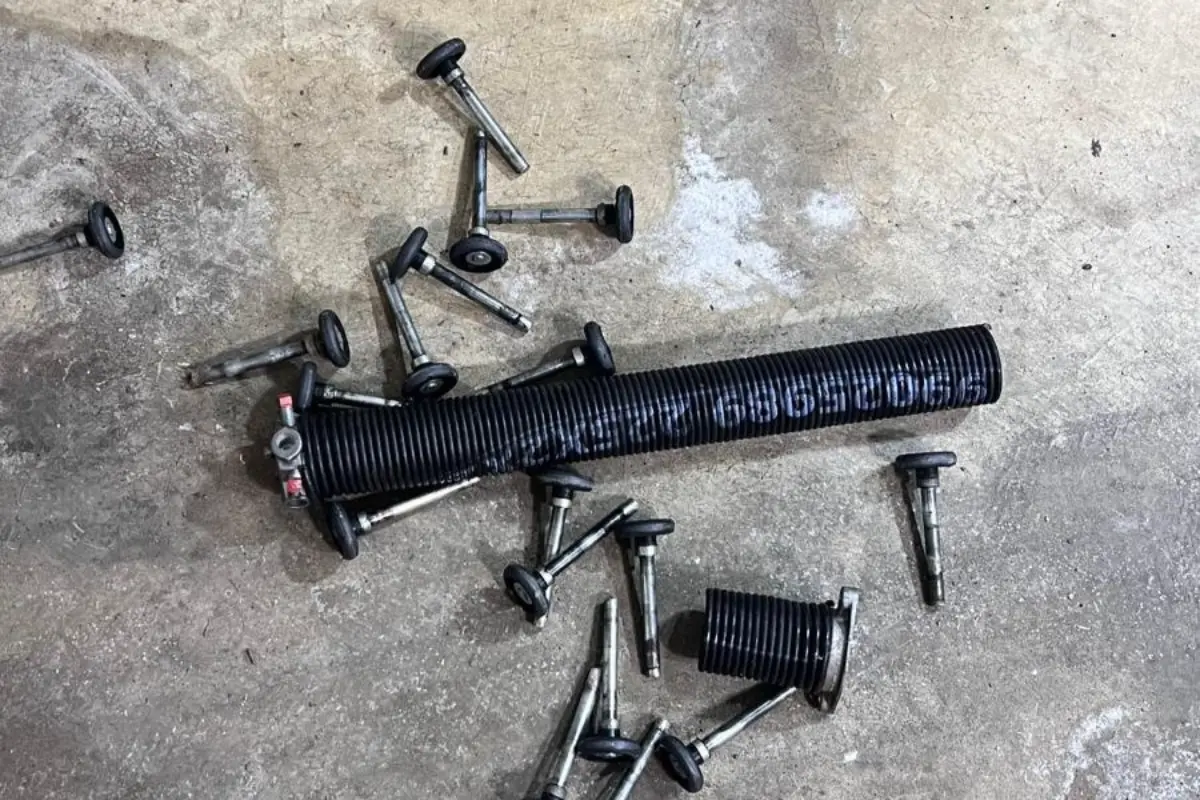
Doors derail for a handful of predictable reasons. Impact is the big one — a bumper nudge from a car (more on that in a moment), a trash can, or equipment against the track or the door itself bends the pathway the rollers depend on. Broken hardware is the quiet one: when a lifting cable snaps or a spring fails on one side, the door’s weight shifts unevenly, and the loaded side can jump its channel — which is why off-track doors and cable failures so often arrive together. Worn rollers with cracked wheels or bent stems stop tracking true and eventually pop out under stress. Loose track hardware — bolts and brackets that have vibrated loose over years of cycles — lets the track itself flex out of position. And obstructions in the track can stop one side dead while the opener keeps pulling the other, twisting the door out of its channel in a single cycle.
Why an off-track door is genuinely dangerous
Here’s what the crooked door in your opening actually is: a very heavy object — residential doors commonly weigh well over a hundred pounds, insulated double doors far more — that has partially escaped the system engineered to control it. The rollers still in their track and the cables still attached are carrying loads they weren’t designed to carry alone, and the door’s remaining grip can fail suddenly: shifting further, dropping a corner, or coming down entirely. The danger compounds if a spring or cable failure caused the derailment, because the counterbalance is compromised too. This is not a “keep using it gently until the appointment” situation — an off-track door can fall, and anything under it when it does loses.
The three rules the moment you find it
Rule one: stop operating the door — no more opener cycles, which twist and drop derailed doors further, and no manual lifting attempts. Rule two: leave it exactly where it is — don’t try to shove rollers back into the track (homeowners get fingers, hands, and worse into pinch points doing this, and the door can shift while you’re under it) and don’t pull the red release cord, which can let a compromised door fall freely. Rule three: keep the area clear — cars out from under if safely possible without operating the door, kids and pets away, and the call made. Neighborhood Garage Door Repair Of Laurel treats off-track doors as the urgent calls they are across the Laurel–Beltsville corridor, precisely because the situation degrades rather than waits.
How professionals actually fix it
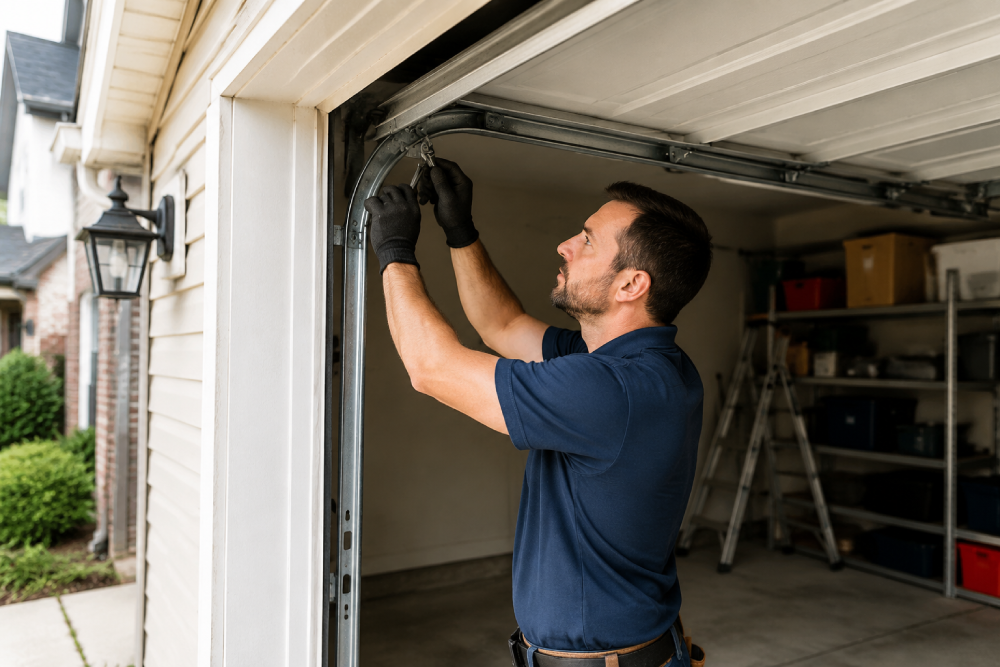
The repair is more than pushing rollers back in a slot — that’s the amateur version that derails again next week. A proper off-track recovery: secure the door’s weight first (clamps and supports so nothing can fall while work proceeds), then diagnose the cause — because the derailment is a symptom, and putting a door back onto a bent track or above a snapped cable just schedules the sequel. Then the actual work: bent track sections straightened or replaced, damaged rollers swapped, cables and springs inspected and repaired if they triggered or suffered in the event, the door re-seated and aligned, and finally the system rebalanced and force-tested — the opener’s settings checked against the door’s true, restored weight, and the safety reverse verified. The door should leave the visit tracking silently and evenly, and the cause should leave with a name.
Preventing the sequel
Most off-track events telegraph or repeat for preventable reasons. Park with margin — the bumper tap is the leading cause and the most avoidable. Listen for the early warnings: scraping, a door that shudders at the same spot, a roller that clicks — all pathway problems announcing themselves cheap. Keep the tracks visually clear of debris and never store items where they can lean or fall into the door’s path. And put the door on an annual professional inspection: loose track bolts, tired rollers, and fraying cables — the ingredients of a derailment — are exactly what a tune-up catches while they’re minor line items. A door that’s been off its tracks once and properly repaired, cause and all, shouldn’t make a habit of it; one that was just shoved back in its slot almost always does.
What to expect from the visit itself
A few practical notes for the call and the visit. Tell the company what you see — “door’s crooked, one side dropped, a cable looks loose” — because that description triages the urgency and tells the technician what to load. Expect the repair to run longer than a simple service call: securing the door, diagnosing the cause, straightening or replacing track, and rebalancing is real work, and most off-track recoveries still finish in a single visit from a stocked truck. Expect a written estimate before the work — even in an urgent situation, the diagnosis-then-quote-then-repair order holds. And expect the technician to walk you through what caused it and what was replaced; the cause is the part of the repair you’re most entitled to understand, because it’s the part that predicts whether this ever happens again. And if the verdict includes companion damage — a cable that snapped in the event, rollers that bent on the way out — getting it all handled in the same visit is both cheaper and safer than staging it: an off-track recovery isn’t finished until the whole pathway is sound.
FAQ
Can I put my garage door back on track myself? No — an off-track door is a very heavy object that has partially escaped its support system, and it can shift or fall during exactly the manipulation you’d be attempting. Stop using the door, leave it in place, keep the area clear, and call a professional; proper repair secures the weight first and fixes the cause, not just the symptom.
What causes a garage door to come off its tracks? Impact (usually a vehicle nudge), snapped cables or springs shifting the door’s weight, worn rollers, loosened track hardware, and obstructions that stop one side while the opener pulls the other. The derailment is a symptom — the repair has to address the cause underneath it.
Is an off-track garage door an emergency? Treat it as one. The door’s remaining grip carries loads it wasn’t designed for and can fail suddenly, and an open, crooked door is also a security problem. It’s a stop-using-it, same-day-call situation.
Published July 2026 · Neighborhood Garage Door Repair Of Laurel · 12912 Rustic Rock Ln, Beltsville, MD 20705 · Serving Laurel & the Route 1 corridor